The Productivity Boom Is Waiting on Retirements
Factories owned electric motors for twenty years before productivity moved, because the men who built their careers on the old floor plan were still running the plants. The AI J-curve resolves on the same clock, and the clock is management turnover.
Contents
Around the turn of the twentieth century, American factories began buying electric motors, and then, for roughly twenty years, almost nothing happened to productivity.
This is one of the most instructive non-events in economic history, so it is worth being precise about what the nothing consisted of. The factories had the motors. The motors worked. And the buildings kept their old shape: a giant central engine, a forest of overhead line shafts and leather belts running power to every machine, the whole floor plan dictated by distance from the shaft. Factory owners unbolted the steam engine, bolted an electric motor in its place, and left everything else alone, which captured a sliver of the technology's value while faithfully preserving the layout that threw the rest away.
The productivity jump came two decades later, and it did not come from better motors. It came from new people. A younger cohort of managers, unattached to the old layout, rebuilt factories around small motors on each machine: single-story plants, floor plans following workflow instead of shaft distance, daylight and logistics where the belts used to be. The machines had allowed that design all along. The design waited on the careers of the men who had built their expertise around the shaft.
The corpus hangs its whole middle period on this precedent, and states the mechanism in a sentence this post exists to unpack: organizational redesign runs at the speed of management turnover. That is a mechanism, not a metaphor, and it comes with a schedule and a test.
Installing is not reorganizing#
Translate the line shaft into the present tense. The AI equivalent of bolting the motor to the old engine mount is installing a copilot: procurement, a license, an onboarding email. It shows up in month one, captures a sliver of value, and changes nothing about the shape of the organization. Call the underlying condition the Line-Shaft Problem: the tool is new, the floor plan is not, and the floor plan is where the productivity lives.
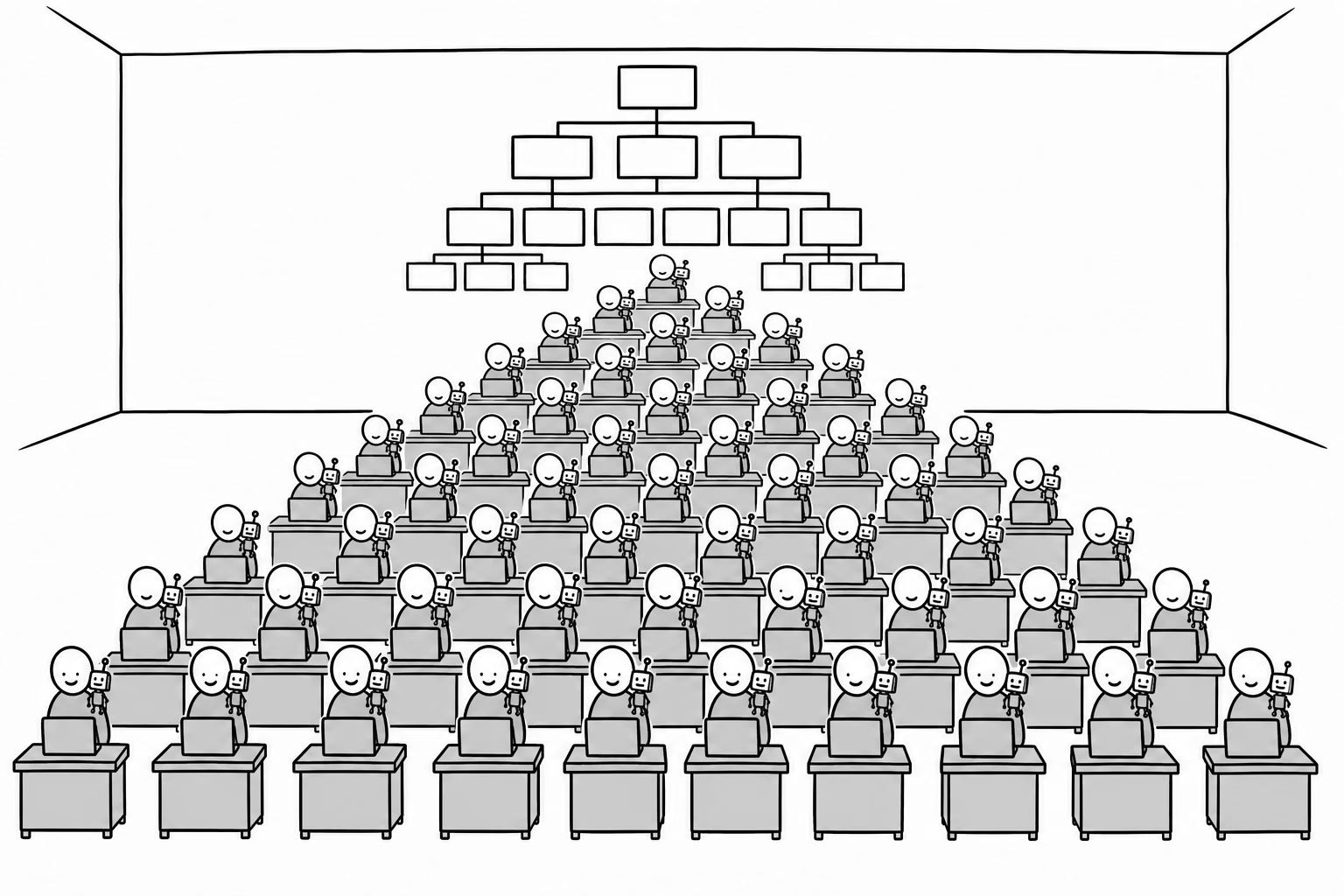
That office has adopted AI at one hundred percent, and every adoption survey it answers will glow. Now look past the parrots: the pyramid on the wall is the same pyramid as last year, which is why the productivity statistics are too.
The equivalent of rebuilding the factory is reorganizing a function around two assumptions the old structure never had: first drafts are free, and verification is the scarce input. Take those seriously and the org chart stops making sense. Spans of control widen, because checking is the job now and one senior person can check what a floor of juniors used to produce. The junior pipeline changes shape or quietly disappears. Review moves from sampling to the center of the workflow. Whole coordination layers, the people whose job was moving drafts between people, lose the thing they coordinated.
And here is why it does not happen on the tool's schedule: the redesign is resisted by exactly the people whose expertise the old workflow encodes. Not from stupidity, from accounting. A senior manager's value is substantially their mastery of the current floor plan, who checks what, what gets escalated, where the bodies are buried in the process. The redesign expropriates that asset. Asking incumbents to lead it is asking them to write down their own capital, and the electrification cohort already showed us how that goes: the plants kept their shafts until the shaft men retired.
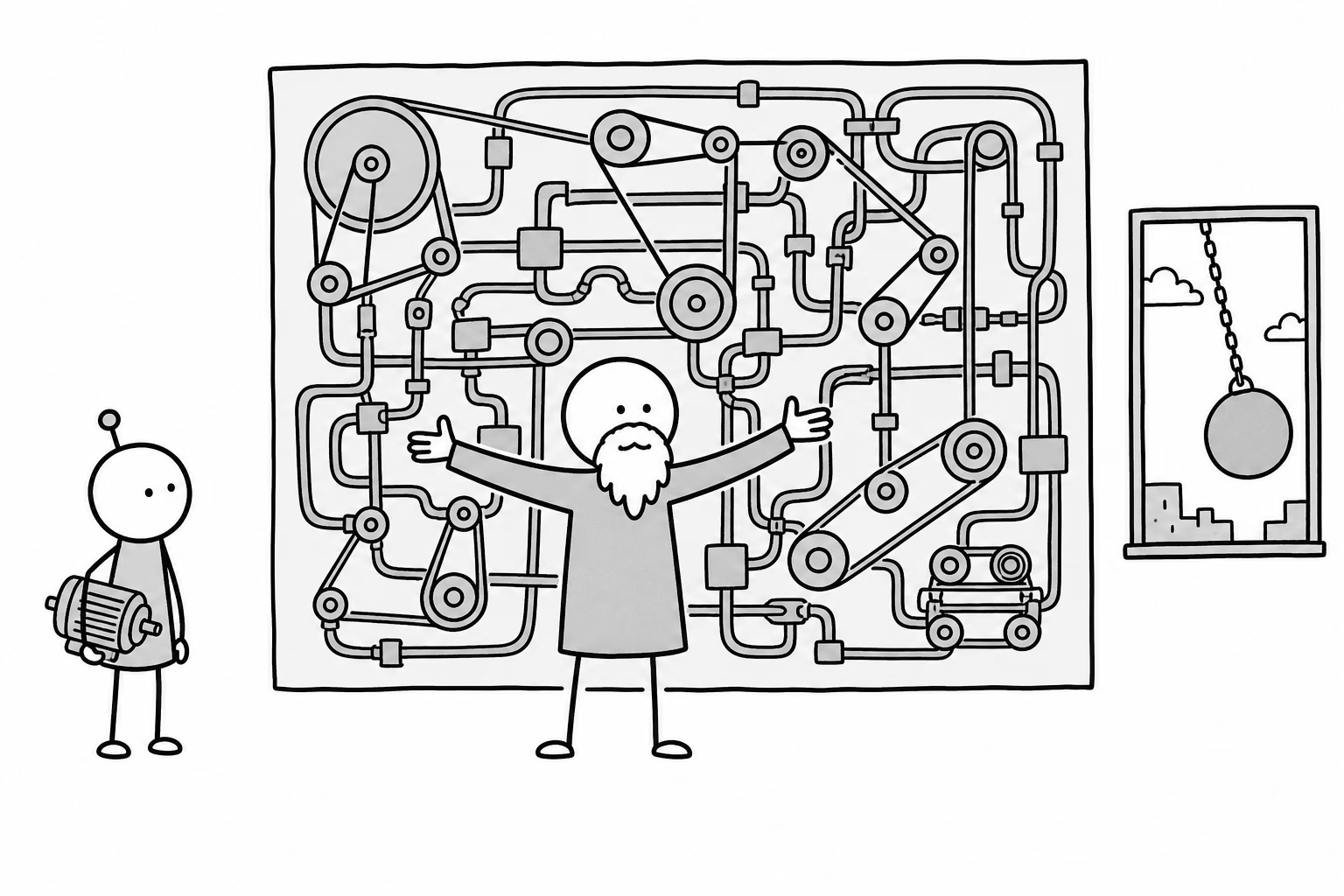
The manager spread across that diagram is defending the most valuable thing they own, a complete mental model of how the current floor works. The young worker holding the little motor is not the threat. The motor is, and it can wait.
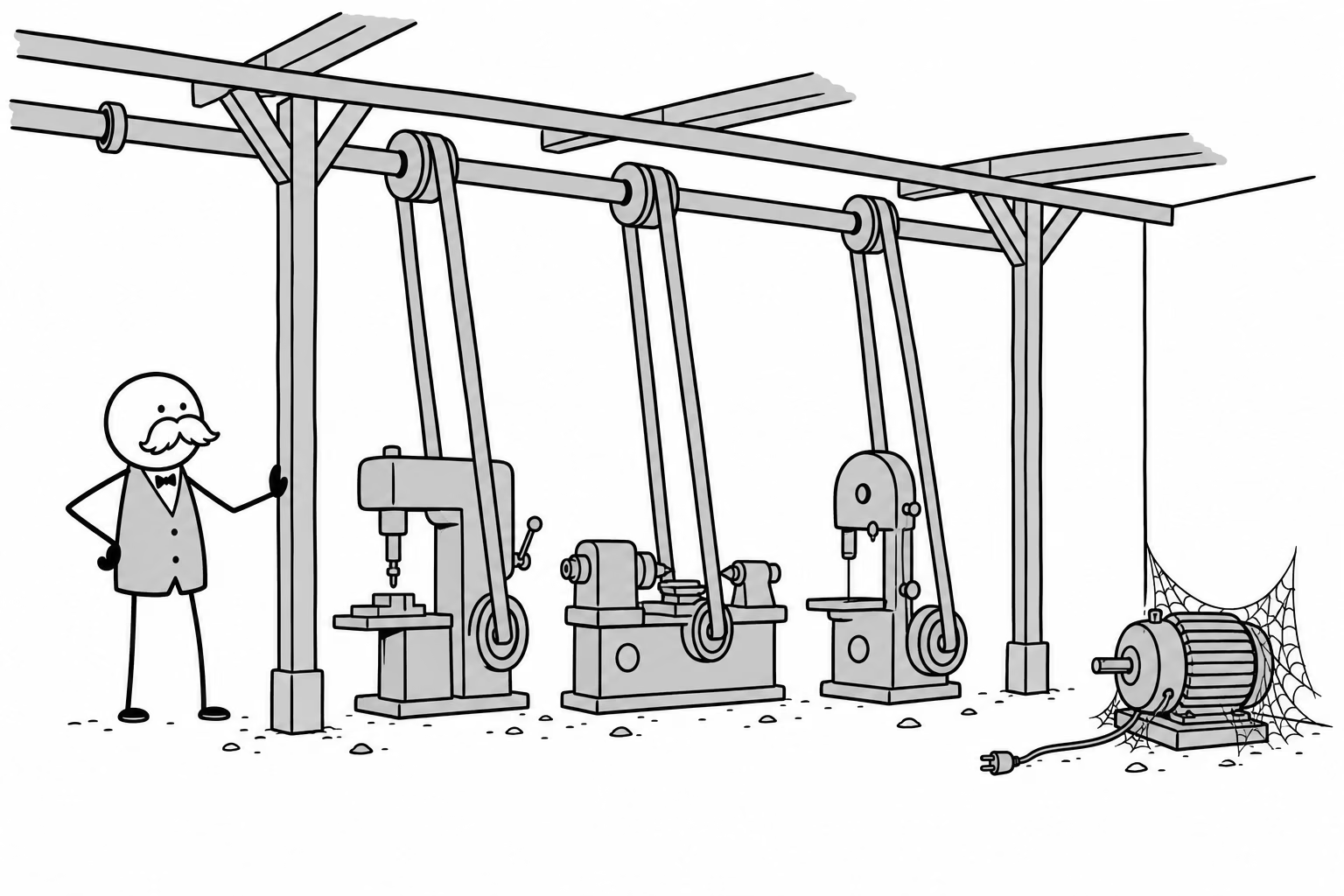
That drawing is the American factory in 1910 and a Fortune 500 workflow in 2027. The cobwebbed motor in the corner is the enterprise AI deployment. The proud figure by the belts is not a villain. He is the most competent person in the building, about the building that is going away.
The forecast: entrants move the statistics, not incumbents#
If the mechanism is right, it makes a prediction sharper than "productivity lags." Sector statistics move when cohort replacement moves: firms founded after the capability existed, which never paid for the old layout, displacing incumbents that installed copilots on top of it. Growth by substitution of firms, not transformation of firms, exactly as single-story plants displaced shaft-built ones rather than shaft-built ones remodeling.
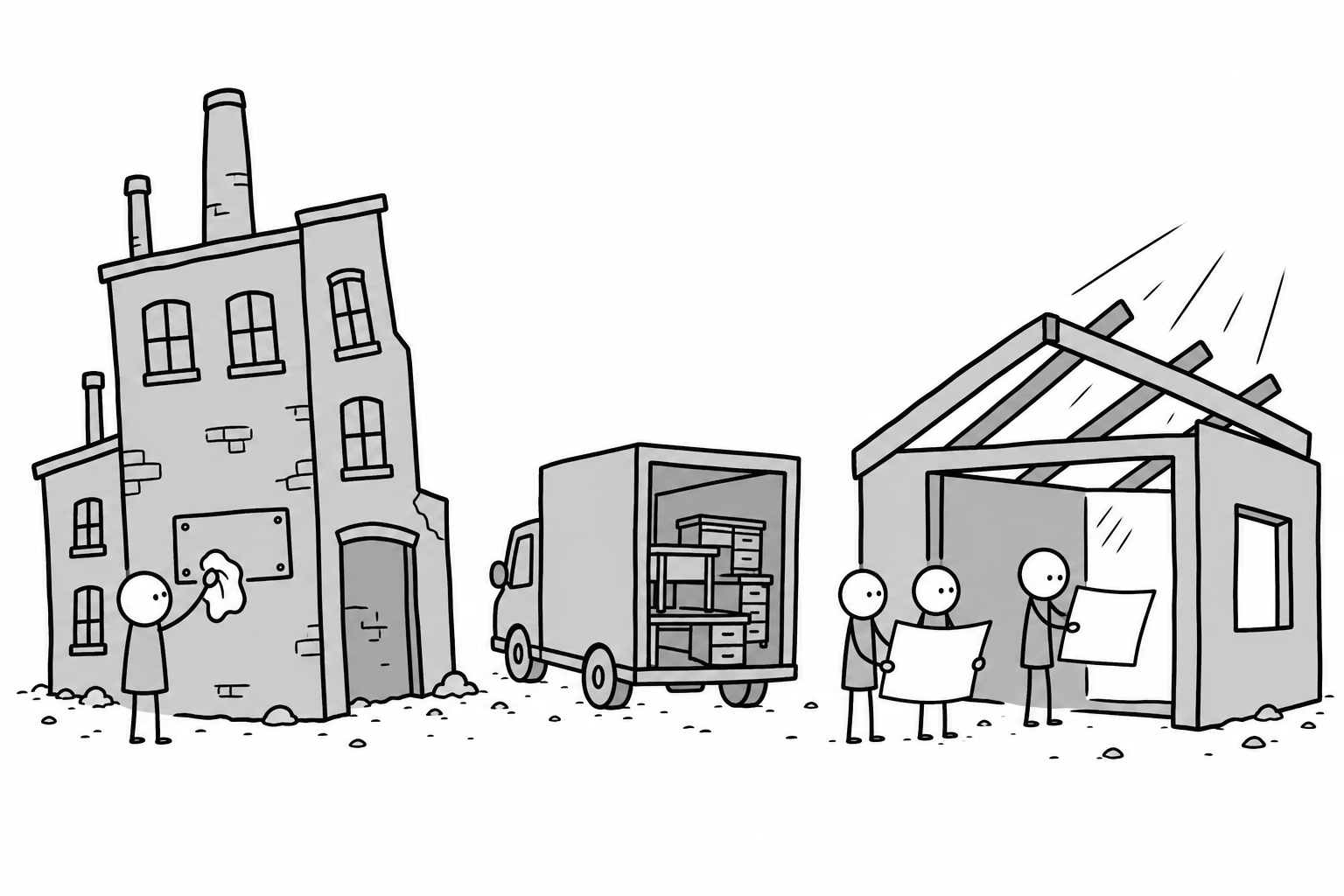
The moving truck between those two buildings is the productivity statistic in transit. It will show up in the sector average when it finishes unloading, not before.
The corpus's timeline places the visible resolution in the 2028 to 2032 window: the J-curve finally turns as intangible investment shows up in output, roughly on the schedule electrification and ERP both followed. Two measurement warnings ride along. Quality-adjusted gains are largely invisible to the price statistics, so the official series will understate whatever happens. And self-reported productivity is unreliable in a known direction, the METR result this blog keeps returning to: experienced developers measured 19% slower with AI assistance while believing they were 20% faster. Weight instrumented and revealed-preference measures. Surveys are how the Line-Shaft Problem hides.
Best of all, the mechanism ships with its own discriminating experiment, and the corpus states it cleanly enough to put on a dashboard. Call it the Dispersion Test: watch productivity dispersion between firms in the same exposed sector. If the redesign story is right, dispersion widens first, redesigned entrants and rebuilt outliers pulling away from installed-copilot incumbents, and the sector mean moves only as share shifts. If instead the mean rises while dispersion stays flat, then AI diffused like a frictionless consumer tool, the turnover mechanism was wrong, and every date in the corpus's middle period is too late.
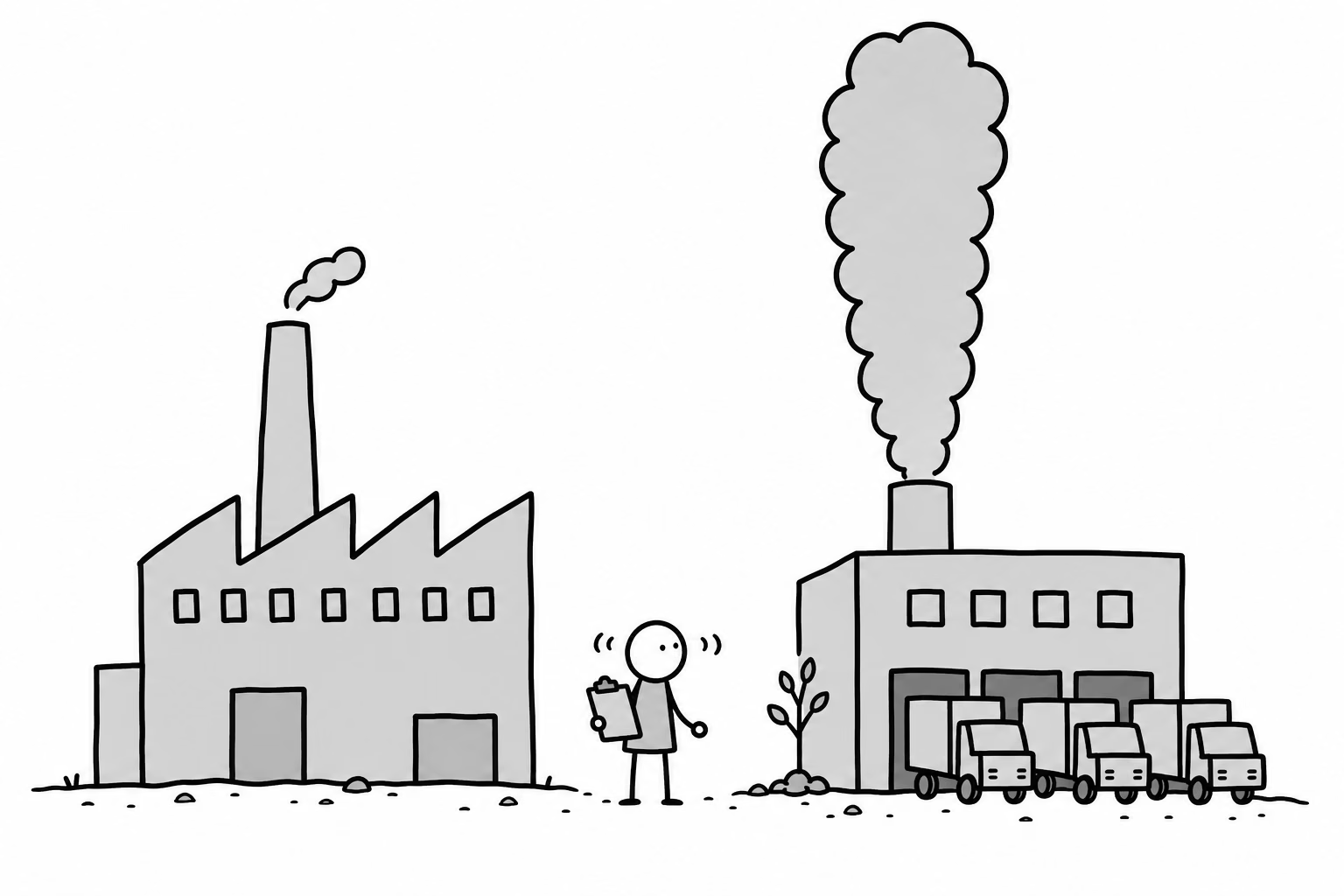
The two factories in that drawing have identical technology available at identical prices. The distance between their outputs is not a technology gap. It is a floor-plan gap, and the forecast is that this gap widens before it closes.
"This cycle is different, the interface is language"#
The strongest objection, and the corpus grants it teeth rather than brushing it off. Electric motors required capital equipment and construction. ERP required consultants and years. A language interface requires typing, adoption is bottom-up and self-serve, and employees smuggle the tools in ahead of the IT department. If diffusion this cycle genuinely behaves like consumer software rather than like electrification, the institutional-lag argument is too long by three to five years, and the corpus names that possibility as its own steelman rather than a fringe case.
The reply is the distinction this whole post rests on: the language interface collapses the cost of installing, and installing was never the binding step. The binding step is the floor plan, spans of control, pipelines, review structures, and no interface however friendly reorganizes those from below. An analyst adopting a copilot cannot widen their own span of control or dissolve their own coordination layer. Only management can, which is why the constraint is management turnover and not user adoption, and why adoption statistics will look spectacular for years while the Dispersion Test stays unresolved. The fastest tool diffusion in history layered on top of the ordinary speed of organizational succession: both true, different layers, and the statistics follow the slow one.
If the objection wins anyway, the evidence will be visible early: sector means rising with flat dispersion, incumbents matching entrants, the J-curve resolving years ahead of the electrification schedule. That is the good failure, and the corpus's METR-replication hinge is the thing to watch for it.
What would prove this post wrong#
- The Dispersion Test resolves flat. Exposed-sector productivity rises with no widening between firms by the late 2020s. The frictionless-tool story wins, the turnover mechanism was this cycle's wrong analogy, and the corpus's middle-period dates all shift earlier.
- Incumbent transformation outruns entry. If the large firms that installed copilots in 2024 to 2026 show the redesign signatures, widened spans, restructured review, changed junior mix, without waiting on leadership succession, then managerial self-expropriation turned out easier than the precedent implies.
- The J-curve never turns. If by the early 2030s measured productivity still has not moved even net of the mismeasurement caveats, the problem was never the floor plan, and something deeper in the capability story failed. This post's scorecard row, keyed to the corpus's own productivity claim, resolves no at its stated 20%.
- The scorecard row's honest shape: the corpus holds a visible-by-2030 productivity step-up at only 20%, precisely because turnover is slow. This post is a mechanism bet, not an optimism bet, and the row is written so that being right about the mechanism and the lag scores as being right.
The electric motor was not waiting for a better motor. It was waiting for funerals, promotions, and the slow arithmetic of who runs the plant.
The models will keep improving on their own schedule. The economy improves on the org chart's schedule, and the org chart turns over one retirement party at a time.
Where this comes from
Every number above is carried by a page in the corpus. These are the ones doing the work:
- 2028–2032 - diffusion and the institutional lag 04-timelines/2028-2032.md
- Game 4 - Labor 02-games/4-labor.md
- Prices and the Two Economies 09-macro/prices.md
- B - Diffusion Indicators 07-indicators/diffusion/README.md
Or interrogate the whole thing directly: ask the corpus.