The Better AI Works, the More It Costs to Finance
A real productivity boom raises the neutral interest rate, which discounts every long-dated asset more harshly, including the AI build itself. The likeliest world is stranger: AI works well enough to matter, and rates stay low anyway.
Contents
Buried inside every trillion-dollar AI capex projection is an assumption so quiet that the people making the projections mostly do not know they are making it: the cost of money stays roughly where it is.
Model spreadsheets, datacenter pro formas, sovereign compute funds, the whole financing stack this blog walked through five days ago, all of it is discounted at rates from the mid-2020s and projected forward as if the discount rate were weather, a background condition unaffected by the thing being financed.
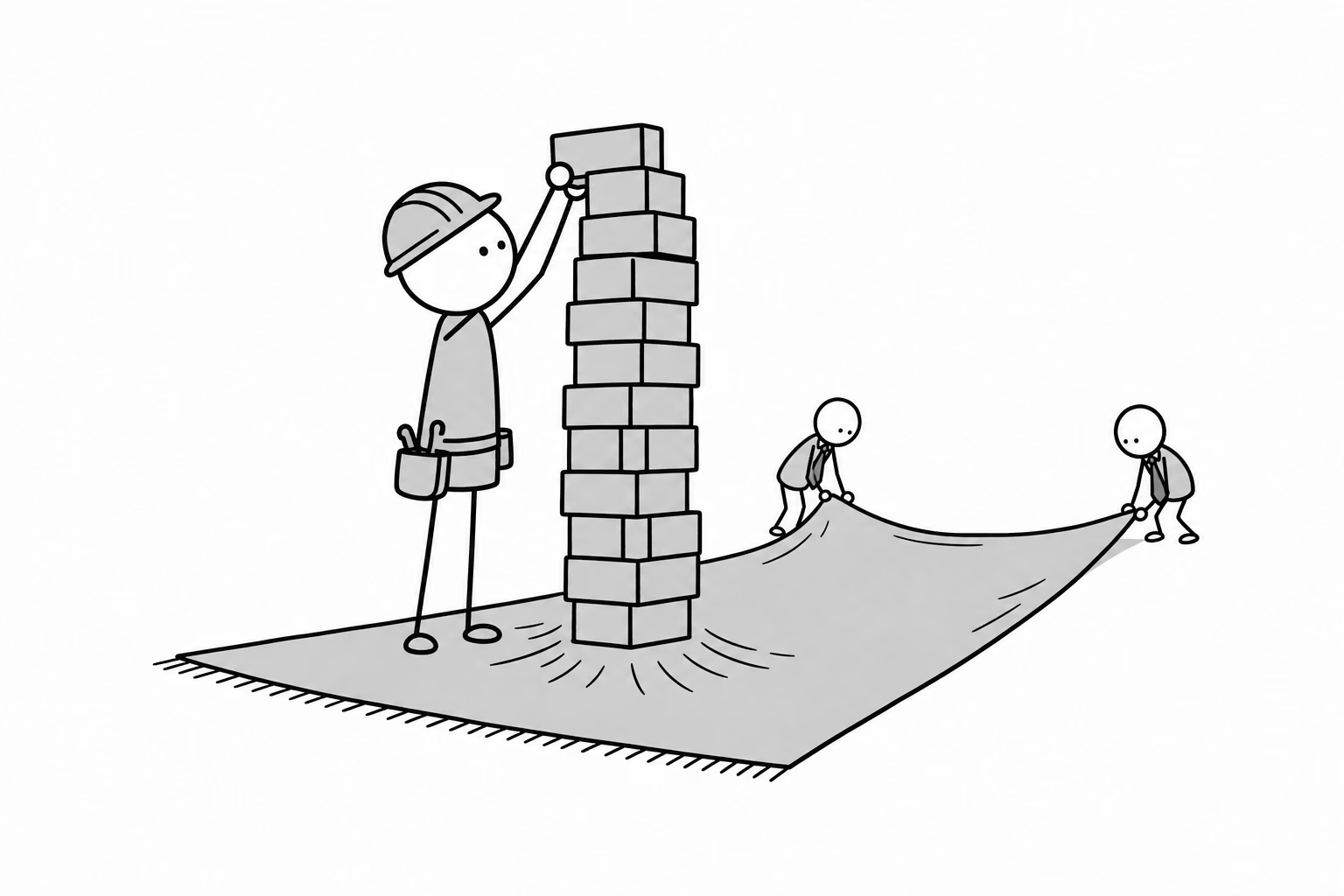
The builder in that drawing has done nothing wrong except assume the floor, and the strange part, the part this post exists to unpack, is that the figures at the corners work for the tower's own success. The corpus points at the buried assumption and makes the claim plainly:
It is wrong in a specific and interesting direction. The better AI works, the more expensive it becomes to finance.
Not as punishment. Not as bubble-popping. As arithmetic, and the arithmetic is old enough to have a name in every macro textbook, which makes it stranger that a multi-trillion dollar build is proceeding as though it were not there.
The mechanism fits in four steps#
The real neutral rate, the interest rate consistent with full employment and stable prices, is not set by central banks over long horizons. It is set by the balance of desired saving against desired investment. Central banks chase it. They do not choose it.
Now suppose AI delivers a genuine productivity step-up. Four things follow in order. Returns on capital rise, and not only in AI, because cheap cognition raises the return on reorganizing nearly everything. Desired investment rises with the returns. The neutral rate rises to clear the market between all that new investment demand and the available saving. And then the step that closes the loop: every long-duration asset gets discounted more harshly, including the thirty-year substations, shells, and transmission rights that the AI build itself is made of.
Call it the Success Tax. The technology's triumph raises the price of the capital required to continue it. This is not a paradox, and the corpus is emphatic that it is not new: it is how every genuine general-purpose technology has behaved. The railway booms and the electrification booms both ran straight through capital-market crises without the underlying technology failing in any way, and in both cases rising rates were part of the mechanism rather than an outside shock.

That is the whole first half of the post in one drawing. The balloon is the productivity story. The rope is the capital market. The anchor is the discount rate, and nobody in the basket cut the rope, because the rope is what they are flying on.
The tide that has been winning for thirty years#
If the Success Tax were the only force, the forecast would be simple and this post would be shorter. It is not the only force. The corpus scores four, and they do not point the same way.
| Force | Direction on rates | Size | Confidence |
|---|---|---|---|
| Productivity step-up | Up | Large, if it lands at all | Conditional |
| Demographics | Down | Large and highly predictable | High |
| Capital-income concentration | Down | Moderate | Moderate |
| Fiscal deterioration | Up | Moderate to large | Moderate |
The second row is the one to respect, because it is the one with a thirty-year winning streak. Shrinking working-age populations across every advanced economy, high savings among the old, falling investment demand to equip workers who do not exist: that is the secular-stagnation machine, it is demographically locked in for decades, and it has flattened every "rates must rise" argument since the 1990s. Call it the Demographic Tide, and note that it does not care about model capability at all.
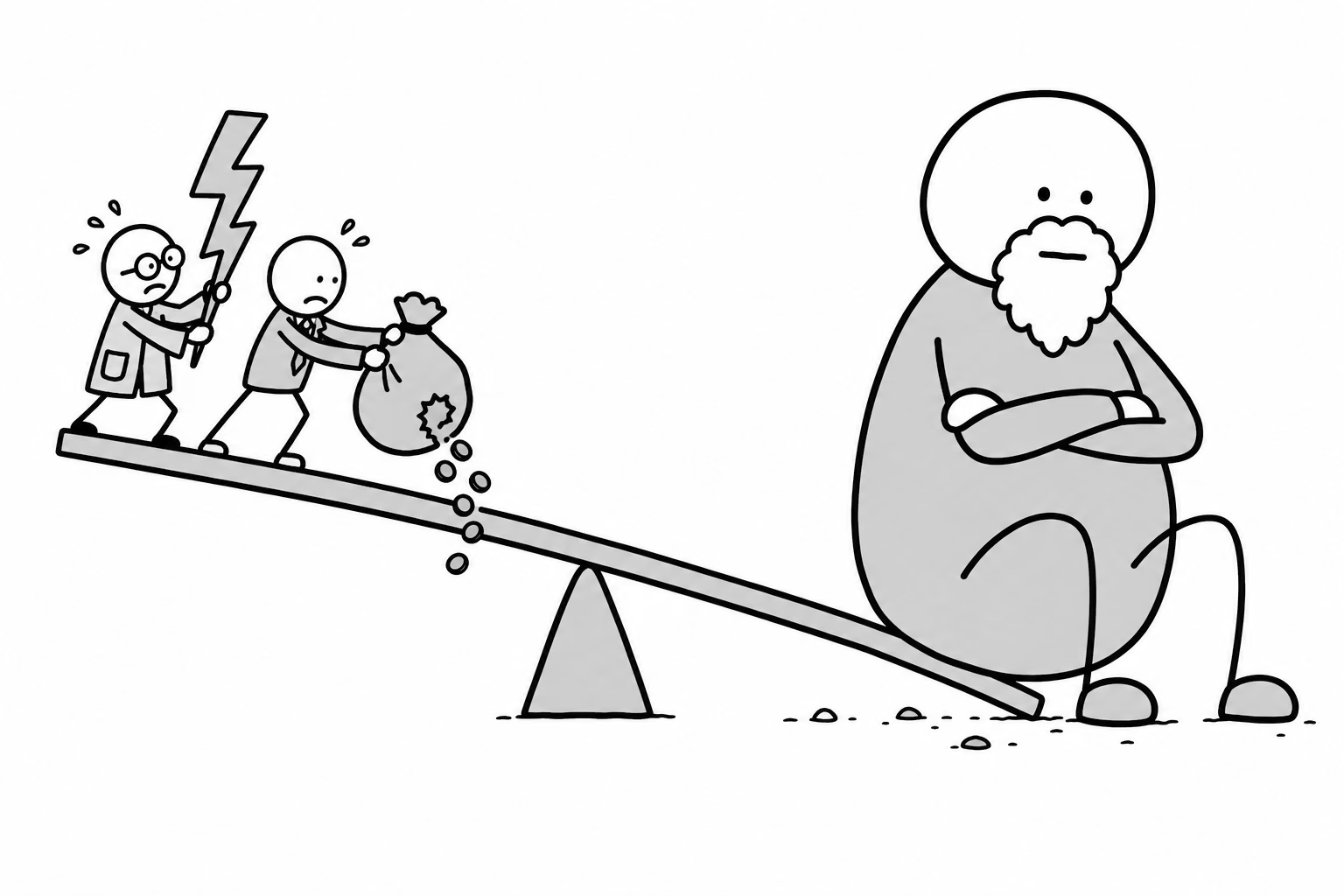
That seesaw is the rates market of the last thirty years. The scientist with the lightning bolt has just climbed on, full of consequence, and the giant has not looked up.
The third row is the subtle one, and the corpus flags it as a link almost nothing in the AI-forecasting literature makes. If the firms game is right that AI's gains accrue to capital and to consumers rather than to labor, then income shifts toward high-savings-propensity holders. More aggregate saving pushes rates down, partially offsetting the very productivity effect that generated the gains. The distribution of the winnings feeds back into the price of capital. Who gets the money changes what the money costs.

The small boat in that drawing has both things happening to it at once, which is the honest picture. The sail is the Success Tax pulling rates up. The long grey swell underneath is the Tide, and the drawing refuses to tell you which one wins, because that refusal is the forecast.
The forecast, with its number#
So the corpus does not predict a rate spike, and neither does this post. It predicts a fight, and prices it: roughly 30% that a productivity step-up raises real rates by more than about 100 basis points against the demographic tide by 2035. That number goes on the scorecard, and it is deliberately consistent with the corpus's own productivity row, because raising real rates a full point against this tide and delivering a visible TFP step-up are nearly the same claim wearing different clothes.
Read the number backwards and it says the strange thing plainly: the most likely world is one where AI works well enough to matter and rates stay low anyway, because demographics dominate. Consider how odd that world is for the people living in it. Genuine technological transformation, visible in output and margins, and the bond market shrugs, because the boomers' savings and the missing workers outweigh the datacenters. Most economic commentary in that world will be a fight between people pointing at the transformation and people pointing at the yields, both certain the other side's evidence must be fake. Both real. Different forces, one price.

The trader in that drawing is not asleep from ignorance. The dominoes on the desk genuinely have not moved, and the rocket out the window is genuinely flying. The 30% above is the probability that the dominoes eventually notice.
"If rates stay low, the capex post was wrong to worry"#
Reasonable, and wrong in an instructive way, because the two posts are about different layers of the same stack.
The refinancing post is about credit: haircuts on melting collateral, refinancing walls, the migration from operating cash to structured debt. Credit events happen at spreads, not at the risk-free rate, and a neocloud can hit its wall with Treasuries at 2% just fine. This post is about the level underneath: what the whole build earns relative to what capital costs, over decades. The Success Tax operates on that layer, and it bites hardest exactly in the scenario where everything goes right, the scenario the credit post spends least time in. Together they bracket the outcome space: if AI disappoints, the Verdict reverses and the credit layer breaks. If AI succeeds, the Success Tax arrives and the discount layer tightens. The only path with neither is the narrow one where AI works modestly, demography keeps rates pinned, and the financing stack grows into its obligations. That narrow path is, per the 30%, the modal one. It is still narrow, and the build is priced as if it were wide.
There is one more interaction, and it runs through the state. Fiscal deterioration pushes rates up as an aging tax base meets rising transfer and interest costs. If AI compresses the labor share of the tax take while adding displacement-driven transfer demand, the fiscal force strengthens from inside the AI story itself. Watch interest expense as a share of government revenue: it is the number that converts this post's abstractions into politics.
What would prove this post wrong#
- Real rates rise more than 100 basis points, sustained, by 2035, with TFP visibly moving. The 30% scenario lands, the Success Tax beats the Tide, and the surprise is that it happened this decade rather than next. The scorecard row resolves yes.
- Rates stay pinned and productivity never shows. Then the whole question was moot: no step-up, no tax, and the interesting failure is in the capability story, not the macro.
- The concentration channel fails. If AI's gains show up broadly in wages, the savings-glut offset weakens, rates get more upward pressure than forecast, and, worth noticing, the distributional story of half this blog improves at the price of this post's arithmetic.
- Fiscal dominance takes over. If deficits push rates up regardless of AI, the signal is unreadable: rates rise for reasons this post did not forecast, and the row resolves on a technicality. The honest response would be to say so in the annotation rather than claim credit.
Every previous general-purpose technology ran through a capital-market crisis on its way to changing the world, and the technology was fine. The investors were not, and the difference between those two sentences is the entire reason this post exists.
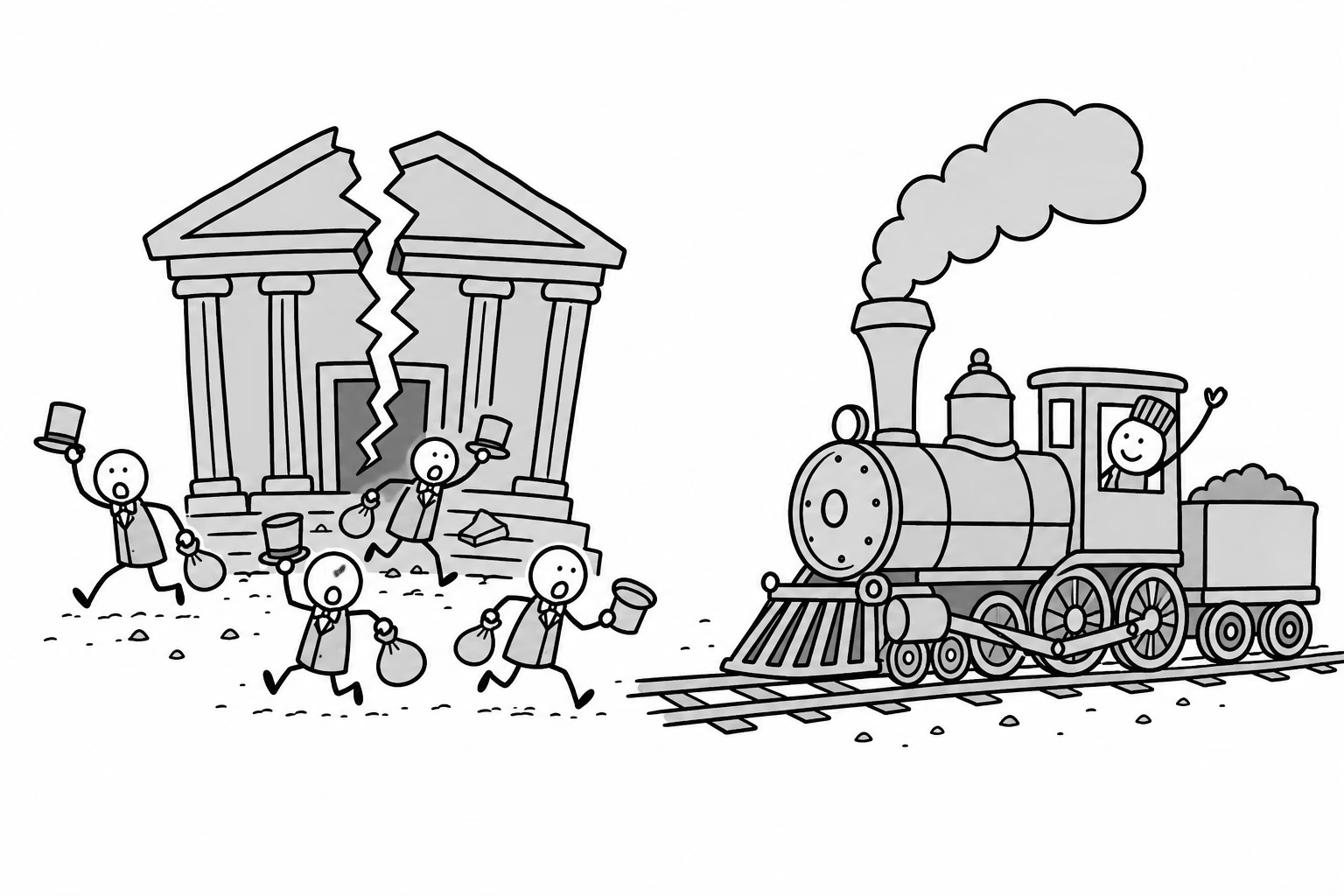
That street is the railway 1840s and the electric 1890s, and if the corpus is right about the shape, some year not far from now. Keep your eye on which half of the drawing recovers first, because it is always the half with the wheels.
The machines will work. The question that decides who profits is set in a market the machine people do not read.
Where this comes from
Every number above is carried by a page in the corpus. These are the ones doing the work:
- Rates and Returns - why success is self-limiting 09-macro/rates.md
- Capital - the input that is not scarce, and why that is the problem 01-substrate/capital.md
- Demography - the large, predictable force pointing the other way 09-macro/demography.md
- Fiscal - a tax base built on labor income 09-macro/fiscal.md
- Game 3 - Firms 02-games/3-firms.md
Or interrogate the whole thing directly: ask the corpus.